
PROFI CONSULTING
from 9am to 5pm


No products
Free shipping! Shipping
0,00 €Total
Product successfully added to your shopping cart
( pcs)
Buy for and have delivery free.
No products
Subcategories

Rubber hoses have been part of the automotive industry since its inception. Used for conducting air in the intake or conducting water in the cooling system or vacuum. All of these applications have undergone minimal changes over the years and use the same materials with one, at most two layers of inner mesh for increased durability. As a result of years of use and constant changes in temperature and mechanical stress, damages can occur that result in leakage of air or substances necessary for the vehicle's operation, which can negatively affect its functionality. The solution is to replace it with the original hose, but this does not solve the problem and the damage may recur.

The long-term development of these systems in motorsport has brought a solution, which are much more durable silicone hoses with 4 or more layers of polyester braid. Replacing stock rubber hoses with silicone hoses is a common practice in the automotive industry, especially in modified vehicles. Silicone is known for its durability and resistance to wear and mechanical damage. Hoses are less likely to crack or become brittle over time compared to rubber hoses. This durability leads to a longer service life and reduced maintenance requirements.
Silicone hoses can withstand higher temperatures compared to rubber hoses. With modified vehicles, there is often an accumulation of heat in the engine compartment, against which silicone hoses are resistant. Hoses retain their structural integrity and flexibility despite temperatures up to 260°C. Low temperatures also do not have any negative effect on the functionality and durability of silicone materials. Durability with full functionality reaches up to -50°C. If the hoses are located near a heat source (such as the exhaust part of the turbo) where temperatures reach higher values than specified, we recommend using thermal insulation or insulating sleeves. Such insulation should help shield the hoses from radiant heat thus extending the life and flexibility of the material.
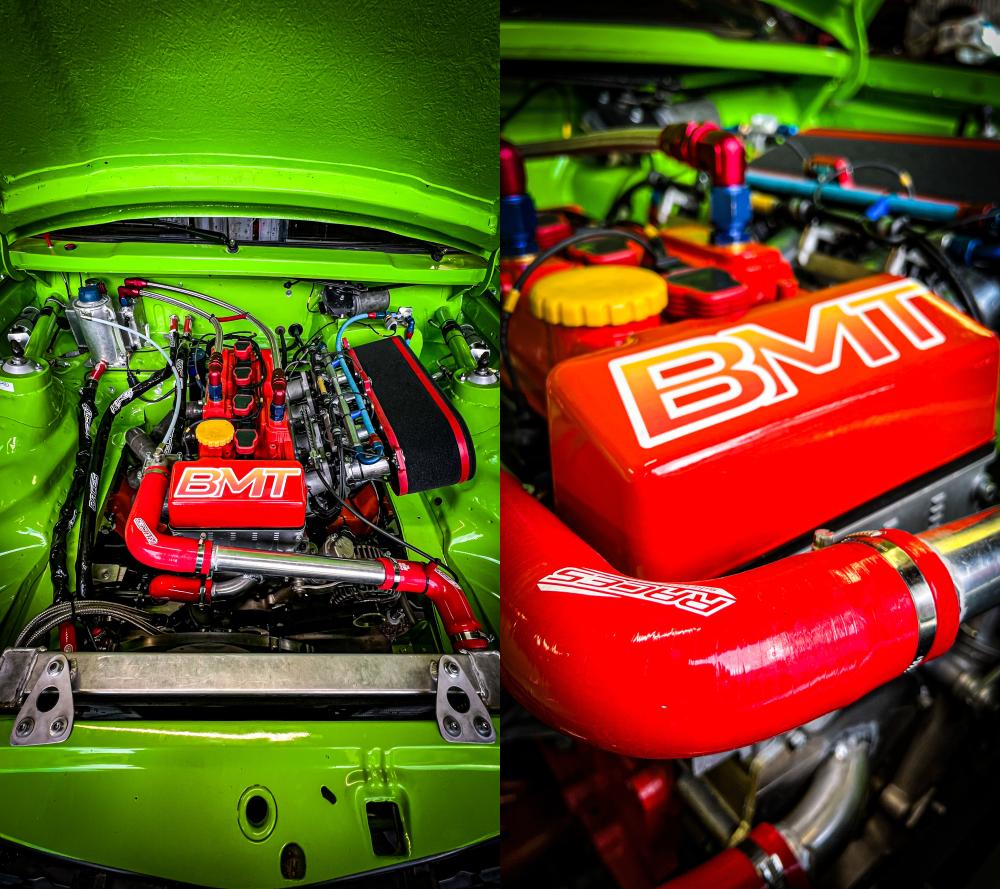
Hoses are more flexible and have a better bend radius than traditional rubber hoses. This flexibility makes them easy to install in tight spaces or around complex engine configurations. The advantage is also the availability of different angles from 45°, through 90° up to 180° and reducers, that allow different internal diameters to be reduced. Silicone hoses labelled as FLEX can be used in confined spaces and to create complex bends. It is a silicone hose enriched with steel wire, which prevents it from being compressed at large turning angles. All these advantages allow the hoses to be combined and arranged in an infinite number of combinations.
Silicone is resistant to many chemicals, oils and fluids commonly found in the automotive environment. This resistance makes the hoses less likely to degrade or react with the substances they come into contact with, contributing to better overall performance and reliability. Silicone hoses resist common coolants, oil vapours or fuel (in the case of silicone hoses intended for fuel filler necks and lines). They also resist UV radiation and ozone, which can contribute to the degradation of rubber hoses. However, the high resistance does not allow these products to be used in places such as the brake system, fuel and oil lines. Long-term exposure to these liquids would damage them.
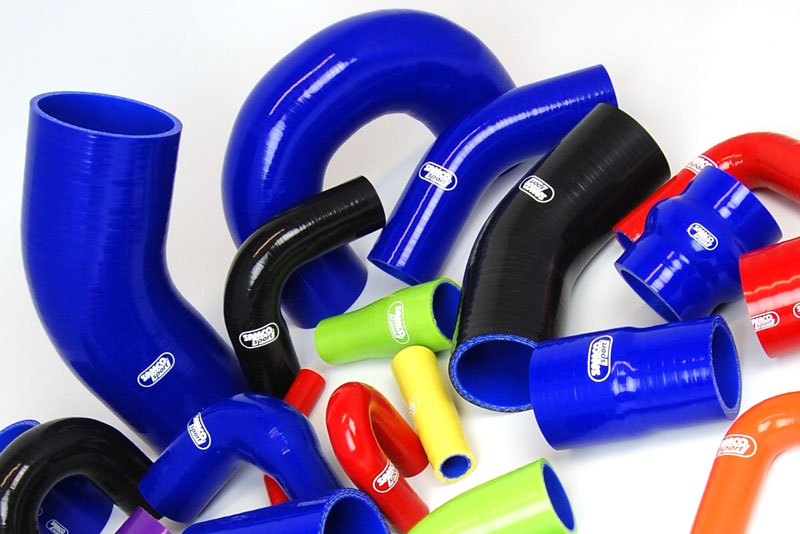
Silicone hoses are not only a functional but also an aesthetic benefit for stock or modified vehicles. They come in a variety of colours, allowing colour matching with the rest of the car or contrast for the maximum enlivenment of the engine compartment. The most common colour version is blue, closely followed by red and black for an inconspicuous appearance, since most of the stock rubber hoses are also black. However, bolder colours such as green, pink or yellow are also available.

Thanks to these advantages, silicone hoses are a popular solution in professional motorsport or in everyday use. Many customers turn to us for the solution of stock rubber hoses that have been damaged and their original replacement costs hundreds of euros. In most cases, silicone solutions are a fraction of the price of OE hoses in either stock or truck vehicles. The creation of systems is based on joining using aluminium pipes. The reverse power supply is also possible in the form of using aluminium pipes with the use of silicone hoses only to connect them. It all depends on the application, method and place of use. In our offer, you will find not only universal hoses but also hoses for a specific type of vehicle as a direct replacement for a standard OE hose. In this way, you can replace rubber hoses with silicone hoses in a few minutes without the need to assemble your system or make additional modifications to either the wiring or the engine compartment.
We know from our own experience that silicone hoses can be used for countless applications. Most often for tuning and motorsport, agricultural machinery and trucks. However, we have also encountered the use of various industrial devices for water or air conduction. The most curious use was the use of hoses for water supply at the pool cleaner.
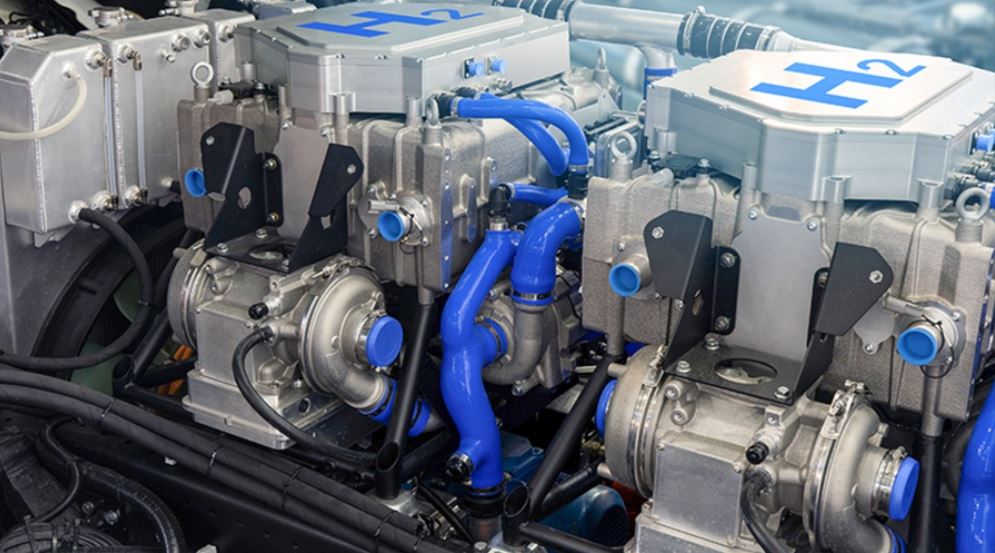
PRO TIP: For high-pressure applications (for example, connecting the intercooler to turbo engines), we recommend using high-pressure clamps.


Intercooler is cooling the compressed air coming from the turbocharger. The advantage of this is that cooler air is thicker, therefore the same volume of air has a higher oxygen content which is more flamable. Such cooled air has a positive effect on the combustion process, and among other benefits also increases performance.
There are several types of input and output for intercoolers:
Intercooler is most often placed in the front of the vehicle. For this location we call it FMIC (Front Mounted Intercooler). Other options are SMIC (Side Mounted Intercooler) or TMIC (Top Mounted Intercooler).
Benefits of using a bigger intercooler:
Disadventages:


An oil catch tank, or in other words oil separator is a device located in the engine breather system. It is used to separate vapours from the valve covers and crankcase of the engine. All modern vehicles "recycle" the vapours from the engine, which means that the venting is done by exhausting them back into the intake. The advantage is a reduction in engine compartment odour and pressure. This system also brings a number of disadvantages:
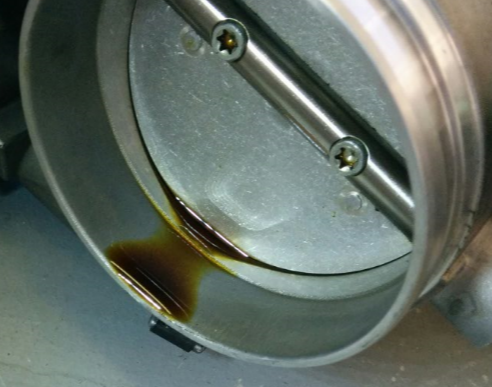
Advantages of installing the vapour ventilation system (OCT):
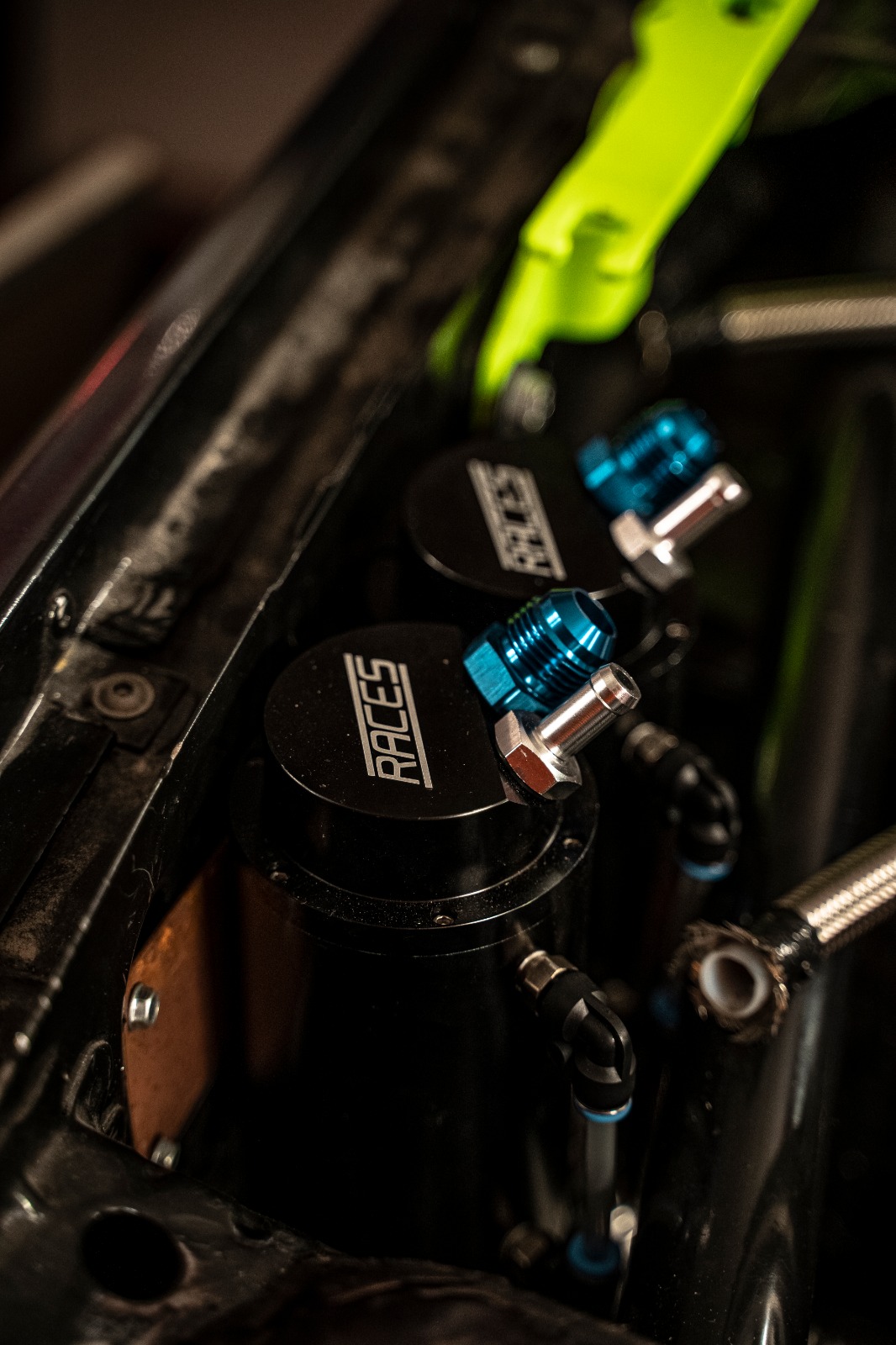
There are 3 types of OCT devices available:
Venting to the atmosphere is provided by separators equipped with a filter or an open section. The oil vapours enter the plant where the liquid part is collected by settling on the walls or in a filter strainer and subsequently flows into the lower part. The vapours escape from the upper part into the atmosphere.
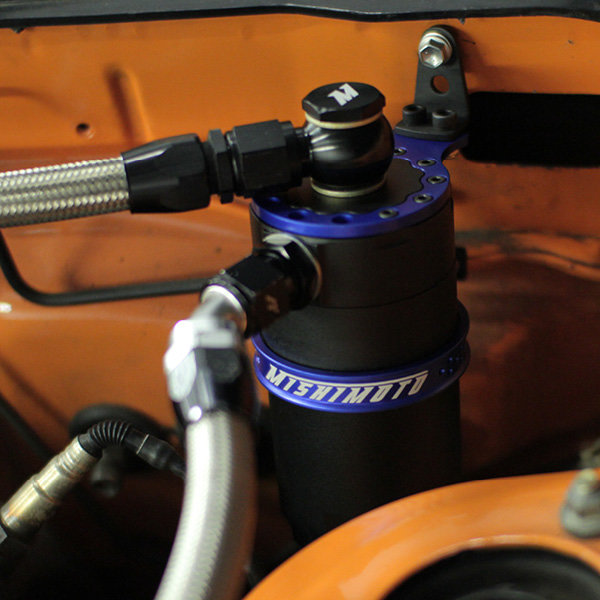
Closed-circuit separators are simply connected to the existing ventilation system. The vapours passing through the system are trapped on the walls or filter sections of the OCT where the excess oil is condensed and remains trapped in the vessel, with the vapours continuing on to the engine intake. This type of OCT is the most common and widely used of the range and is also suitable for modern vehicles.
Combination separators are the ideal addition if you are unsure of which OCT to use whereby by installing or blanking the filter you can turn this product into an atmospheric or sealed oil catch tank.
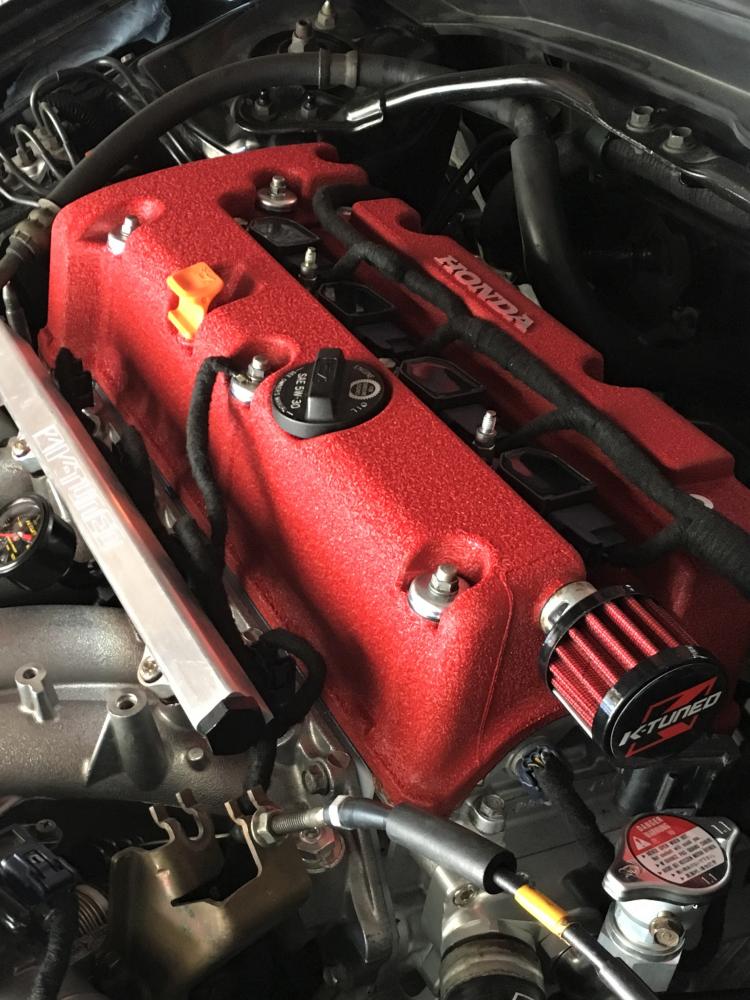
A common method of venting the valve cover is to use a universal mini filter, which allows direct venting to the atmosphere. However, the disadvantage is frequent smoking from under the hood and contamination of the engine compartment with oily oil vapours.
n our offer you will find separators equipped with filter strainers, measuring cups or filters. There are also carbon or OCT products equipped with professional connections using AN fittings.

Blow off or BOV is a valve used in turbo or supercharged engines. Its main purpose is to release the excess pressure created between the throttle and the turbine while turbo is still rotating when shifting gears. This results in pressure remaining in the pipeline due to closed throttle valve. By using BOV, this excess compressed air is forcibly removed from the pipeline to produce characteristic sound for BOV and avoid so-called turbo lag.
We usually distinguish valves into two categories, Open and Closed.
There are also BOV valves for Diesel engines, which only works as sound effect while changing gears.


Boost controller allow a simple increase in turbo pressure. Suitable for all turbocharged and supercharged engines (and diesel). Controllers affect the air pressure from the compressor part of the turbo or compressor leading to the wastegate to increase boost.
There are two types of turbo pressure controllers. Mechanical and Electronic.
Mechanical (or manual) controllers offer a wide range of boost pressure settings. They are simply installed (in the cabin or in the engine compartment), they are simple to operate and require only minimal maintenance.
Advantages:
Disadvantages:
Electronic turbo pressure controllers are much more sophisticated devices that offer many boost settings according to preset values by user. Pressure changes can be made by gear shift, time, speed or by manual switch.
Advantages:
Disadventages:


Download ARP Catalogue(pdf)


